Conditions
Missing Teeth Treatment in Waterford Twp
Options for replacing missing teeth, including implants, bridges and dentures. Your dentist explains each choice so you can pick what fits your needs.
Dental care for missing teeth
Get to the root of your missing teeth
Also known as: Tooth Loss, Gaps in Teeth, Edentulism
Losing a tooth affects more than your smile. A gap can make chewing harder, change the way you speak, and let nearby teeth shift out of place over time. The good news is that there are several ways to replace missing teeth, from dental implants to bridges and dentures. Our team looks at your teeth, gums and jawbone, explains each option in plain language, and helps you weigh comfort, appearance and cost so you can choose what fits your life.
Symptoms of missing teeth
- ✓A gap where a tooth used to be, or where one never grew in
- ✓Nearby teeth that tilt or drift into the space
- ✓Trouble chewing, or a habit of chewing on one side
- ✓Changes in how your upper and lower teeth fit together
- ✓Changes in your speech, such as a new whistle or lisp
- ✓A sunken look around the lips or cheeks when several teeth are missing
Common causes
- Tooth decay that has damaged a tooth beyond repair
- Gum disease, which can loosen teeth over time
- An injury to the mouth from a fall, a sport or an accident
- A tooth removed because of infection, a deep crack or crowding
- Teeth that never developed, since some people are born without certain teeth
- Older dental work, such as a bridge or a treated tooth, that has failed

Our approach
How we treat missing teeth in Waterford Twp
- Step 1
Check your foundation
We examine your remaining teeth, gums and bite, and use X-rays to look at the bone where the tooth is missing. Healthy gums and enough bone help shape which options make sense.
- Step 2
Compare your options
Your dentist explains how implants, bridges and dentures work, how long each one takes, how it is cared for and what it costs, so you can compare them side by side.
- Step 3
Plan your new smile
We map out the steps, including any treatment needed first, and coordinate with a specialist such as an oral surgeon or periodontist if your case calls for one.
The basics
Understanding missing teeth
Each tooth helps hold its neighbors in place. When one is lost, the teeth on either side can slowly tilt into the space, and the tooth above or below it can drift up or down. This can change your bite, make teeth harder to clean, and raise the risk of cavities and gum disease in the teeth that remain. The jawbone changes too. Tooth roots help keep the bone around them healthy, so after a tooth is lost, the bone in that area often shrinks over time.
Tooth decay, gum disease and injury are common causes of tooth loss in adults, and some people are born without certain teeth. Whatever the cause, it helps to talk about replacement options early, before nearby teeth shift and the bone changes. Your dentist will check the health of your remaining teeth, gums and bone, often with X-rays, to see which options suit you. Some people are good candidates for implants, while a bridge or a denture is a better fit for others. There is no single right answer for everyone.
Complimentary Consultation
Free
Meet Dr. Roach or Dr. Gietzen, talk through your smile goals and leave with a clear plan.
For new patients. No sales pitch and no obligation.
What are missing teeth?
Missing teeth are adult teeth that have been lost or removed, or that never grew in. You might be missing one tooth, several teeth or all of your teeth. Tooth loss can come from decay, gum disease, an injury or an extraction, and it can affect how you chew, speak and smile.
A missing tooth is not only a cosmetic concern. Over time, a gap can affect the teeth around it, your bite and the bone in your jaw. The sooner you talk with your dentist about it, the more options you are likely to have.
Common signs
The most obvious sign is a gap. But a missing tooth can lead to other changes over months and years:
- Shifting teeth. Teeth next to the gap can tilt or drift, and new spaces can open between other teeth.
- Bite changes. Your upper and lower teeth may not meet the way they used to, and your jaw may feel tired after chewing.
- Trouble chewing. Many people start chewing on one side, which puts extra wear on those teeth.
- Speech changes. Missing front teeth can cause a whistle or lisp on certain sounds.
- A change in facial shape. When several teeth are missing, the lips and cheeks can look sunken because the bone and teeth no longer support them.
A loose adult tooth is also a warning sign. It can mean gum disease or an injury, and early care may help save the tooth.
When to see a dentist
You do not need to wait until a gap causes problems. Make an appointment if:
- You have lost a tooth or had one removed and want to talk about replacing it
- An adult tooth feels loose
- Your teeth seem to be shifting or your bite feels different
- A current denture, partial or bridge feels loose, cracked or causes sore spots
- You are missing teeth and have trouble chewing the foods you enjoy
If an adult tooth was just knocked out, call a dentist right away. Quick action gives the tooth a better chance. Our knocked-out tooth page explains what to do. Get emergency care right away (go to an emergency room or call 911) if you also have a jaw injury, facial swelling that spreads, trouble breathing or swallowing, or a fever.
How we can help
Your visit starts with an exam of your remaining teeth, your gums and your bite, along with X-rays to check the bone. If decay or gum disease needs care first, we explain that and help you plan the order of treatment. Then your dentist walks you through the replacement options that fit your mouth:
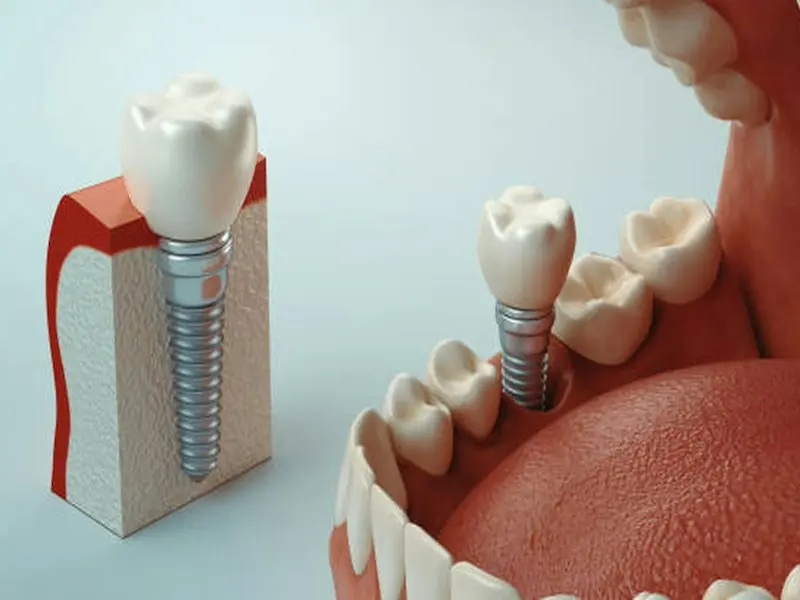
- Dental implants replace the root of the tooth with a small post placed in the jawbone, topped with a crown. Implants can also support a bridge or a denture. Some patients need a bone graft first, and some cases are referred to a specialist (an oral surgeon or periodontist).
- Dental bridges fill a gap with a false tooth held in place by crowns on the teeth on either side. A bridge stays in your mouth and does not come out.
- Dentures and partials are removable. A full denture replaces all the teeth in an upper or lower arch, and a partial fills in gaps between natural teeth.
- Smile makeovers combine tooth replacement with cosmetic care to improve how your smile looks.
The right choice depends on how many teeth are missing and where, the health of your gums and bone, your budget, and whether you prefer something fixed in place or removable. Coverage varies by plan; our team can check your benefits before treatment and walk you through our payment options.
New to our office? Visit our new patients page to see what to expect, or book an appointment to talk about your options for replacing missing teeth.
Treatment options
Treatments we use for missing teeth
Dental Implants
Dental implants replace missing teeth with a small post placed in the jawbone and a custom crown on top. Learn who is a candidate, the steps and recovery.
Learn more →Dental Bridges
A dental bridge fills the gap from one or more missing teeth with a fixed false tooth anchored to nearby teeth or implants. See what to expect.
Learn more →Dentures & Partials
Full and partial dentures replace missing teeth with a removable, custom-fit appliance. Learn about your options, the fitting process and daily care.
Learn more →Smile Makeovers
A smile makeover combines treatments like whitening, veneers, Invisalign, crowns and tooth replacement into one plan built around your goals and health.
Learn more →Full-Mouth Reconstruction
Full-mouth reconstruction rebuilds many worn, broken or missing teeth with a phased plan that combines treatments to restore how your teeth work and look.
Learn more →Restorative Dentistry
Restorative dentistry repairs damaged teeth and replaces missing ones with fillings, crowns, bridges, implants and dentures, so you can chew and smile with comfort.
Learn more →Oral Surgery
Oral surgery at our office includes tooth extractions, wisdom tooth removal, bone grafting and dental implant placement, with numbing and clear aftercare steps.
Learn more →Dental Bone Grafting
Dental bone grafting rebuilds jawbone lost after a tooth is removed, so there is enough healthy bone to support a dental implant or help keep your jaw's shape.
Learn more →Prosthodontic Care
Prosthodontic care replaces missing teeth and rebuilds damaged ones with crowns, bridges, dentures and implant-supported teeth, planned around your bite.
Learn more →Related conditions
Other conditions we treat in Waterford Twp
Patient reviews
What our Waterford Twp patients say
“I have been a client at Dental 1 for many many years and have found them knowledgeable, professional and caring. Also, the staff is awesome”
“The best team ever”
“They did a great job.Thank you”
What happens if I do not replace a missing tooth?+
Nearby teeth may slowly tilt or drift into the gap, and the tooth above or below it can shift too. This can change your bite and make cleaning harder. The jawbone in that spot also tends to shrink over time, which can limit future options.
What are my options for replacing a missing tooth?+
The main options are dental implants, bridges and dentures. An implant replaces the tooth root with a small post in the jawbone. A bridge attaches a false tooth to the teeth beside the gap. Dentures and partials are removable. Your dentist will explain which ones suit you.
Am I a good candidate for dental implants?+
Many adults with healthy gums and enough jawbone can have implants. Smoking, uncontrolled diabetes, gum disease or bone loss can affect whether implants are a good fit. Your dentist will review your health history and X-rays, and some cases are referred to an oral surgeon or periodontist.
What is the difference between a bridge and an implant?+
A bridge fills a gap by attaching a false tooth to crowns on the teeth beside it, so those teeth usually need to be reshaped. An implant stands on its own in the jawbone and does not rely on neighboring teeth. Your dentist can explain the pros and cons of each.
Should I replace a missing back tooth if no one can see the gap?+
Often, yes. Back teeth do much of the heavy work of chewing, and a gap can let other teeth shift and change your bite. Your dentist can explain what may happen if you leave the space open and help you decide whether to replace the tooth.
Does insurance cover replacing missing teeth?+
Coverage varies by plan, and what a plan covers for implants, bridges and dentures can differ. Our team can check your benefits before treatment and explain the costs and payment options, so you know what to expect before you decide.
What should I do if a tooth was just knocked out?+
Call a dentist right away. Pick up an adult tooth by the top, not the root, rinse it gently and try to place it back in the socket. If you cannot, keep it in milk and get to a dentist quickly. Never put a baby tooth back in.
How long does it take to replace a missing tooth?+
It depends on the option. Bridges and dentures can often be made within a few weeks. Implants usually take several months, because the jawbone needs time to heal around the post before the new tooth is attached. Your dentist will give you a timeline for your plan.