Services
Dental Bridges in Waterford Twp
A dental bridge fills the gap from one or more missing teeth with a fixed false tooth anchored to nearby teeth or implants. See what to expect.
Dental 1
Dental Bridges in Waterford Twp
A missing tooth affects more than your smile. It can make chewing harder, and over time the teeth next to the gap may shift. A dental bridge fills that space with a false tooth that is held in place by the teeth or implants on either side. Unlike a denture, a bridge stays in your mouth and is not taken out for cleaning. Your dentist will explain whether a bridge, an implant or a partial denture fits your needs.
How it works
What to expect with dental bridges
- Step 1
Review your options
Your dentist checks the gap, the neighboring teeth and your gums, and takes X-rays. You hear the pros and cons of a bridge, an implant and a partial denture.
- Step 2
Prepare and record
The anchor teeth are numbed and reshaped. Your dentist takes an impression or scan, and a temporary bridge protects the teeth while the final bridge is made.
- Step 3
Fit, cement and teach
Your dentist checks the fit and bite of the new bridge, cements it in place, and shows you how to clean under the false tooth.
Why patients choose it
Benefits of dental bridges
Fills the gap from one or more missing teeth
Stays in place and is not removed for cleaning
Helps keep nearby teeth from drifting into the space
Can make chewing and speaking easier
Shaded to blend in with your other teeth
Often completed in two visits
The basics
About dental bridges
When a tooth is lost, the space it leaves does not stay empty for long. The teeth on either side can slowly tip or drift into the gap, and the tooth above or below it may move toward the space. These changes can affect your bite, make it harder to clean between teeth and put extra strain on the teeth you have left. The jawbone where the tooth used to be can also shrink over time, because it no longer holds a tooth root.
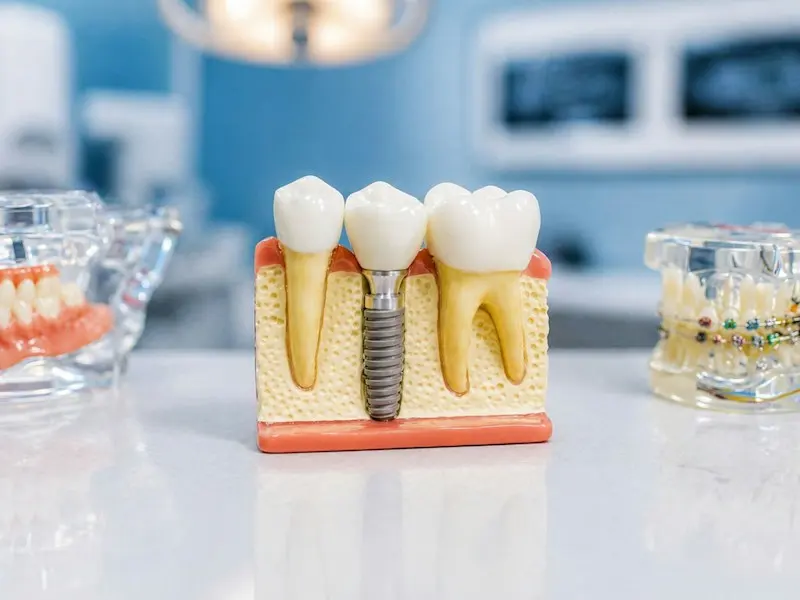
A traditional bridge is made of three or more connected pieces. The false tooth in the middle, called a pontic, is joined to crowns that fit over the neighboring teeth, called abutments. Because those neighbors must be reshaped for crowns, a traditional bridge makes the most sense when they already need crowns or large fillings. Other designs include a resin-bonded bridge, which attaches with small wings bonded to the backs of nearby teeth, and an implant-supported bridge, which rests on dental implants instead of natural teeth.
Complimentary Consultation
Free
Meet Dr. Roach or Dr. Gietzen, talk through your smile goals and leave with a clear plan.
For new patients. No sales pitch and no obligation.
What is a dental bridge?
A dental bridge is a fixed replacement for one or more missing teeth. It uses a false tooth, called a pontic, that is attached to the teeth or implants on each side of the gap. The bridge is cemented in place, so unlike a denture, you do not take it out.
The name comes from the way it spans, or bridges, the gap. A bridge can replace a single tooth or several teeth in a row, as long as there are strong anchors on either side.
What to expect
Planning. Your dentist starts with an exam and X-rays of the gap and the teeth around it. The anchor teeth and gums need to be healthy, so any decay or gum disease is treated first. You will talk through your choices, including a bridge, a dental implant or a partial denture, and what each one involves.
Preparing the teeth. For a traditional bridge, the anchor teeth are numbed and reshaped so crowns can fit over them. Your dentist takes an impression or digital scan and picks a shade that matches your teeth. You leave with a temporary bridge that protects the teeth and fills the space.
Placing the bridge. When the final bridge is ready, often in a few weeks, your dentist removes the temporary and checks the fit, the color and your bite. Once it is right, the bridge is cemented in place. You may need a short follow-up visit for a small bite adjustment.
Getting used to it. Your bridge may feel a little bulky for the first few days. Start with softer foods and cut food into smaller pieces until it feels normal. Some sensitivity to cold is common at first. The most important habit is cleaning under the false tooth every day, where plaque and food can collect. Your dentist or hygienist will show you how, and you will keep brushing twice a day and seeing us for regular checkups.
Who it helps
A bridge may be a good choice if you have:
- One or more missing teeth with strong teeth or implants on both sides of the gap
- A tooth lost after a knocked-out tooth injury that could not be saved
- Neighboring teeth that already need crowns, so reshaping them serves two purposes
- A gap that is making chewing harder or letting nearby teeth shift
A bridge is not right for everyone. If many teeth are missing, a partial or full denture may make more sense. If the teeth on either side are healthy and you have enough jawbone, an implant may be worth considering. With a traditional bridge, each anchor tooth gets a crown, so you may want to read about dental crowns too.
If a tooth was just knocked out, call a dentist right away. A knocked-out adult tooth can sometimes be saved if it is put back in quickly. If you also hurt your jaw or head, get emergency medical care first.
Why choose our office
Replacing a tooth is a big decision, so we take time to explain it. Your dentist walks you through your X-rays, the condition of the teeth next to the gap, and the honest pros and cons of each option. We will not rush you toward one choice.
Your dentist numbs the area before any work and checks in with you along the way. Our team can check your insurance benefits before treatment and explain your share of the cost. Our payment options page lists other ways to pay. Questions are welcome at every step, before and after your bridge is placed.
Ready to talk about a missing tooth? See what your first visit includes on our new patient page, or book an appointment.
What it helps
Conditions we treat with dental bridges
How long does it take to get a dental bridge?+
A traditional bridge usually takes two visits a few weeks apart. At the first, your dentist prepares the anchor teeth, takes an impression or scan and places a temporary bridge. At the second, the final bridge is checked and cemented. Implant bridges take longer because the implants must heal first.
Is a bridge or an implant better for a missing tooth?+
Each has trade-offs. A bridge is often quicker and does not need surgery, but it involves reshaping the neighboring teeth. An implant replaces the root and leaves nearby teeth alone, but it needs surgery, healing time and enough bone. Your dentist will explain which suits your situation.
How do I clean under a bridge?+
Brush twice a day and clean under the false tooth once a day. A floss threader, thicker bridge floss, a small between-the-teeth brush or a water flosser can reach the space where food collects. Your dentist or hygienist will show you which tool works well for your bridge.
How long does a dental bridge last?+
Many bridges last for years with good care, but they can wear, chip or loosen over time. The anchor teeth can still get cavities or gum disease, which is a common reason a bridge needs to be replaced. Daily cleaning and regular checkups help protect them.
Will a bridge look and feel natural?+
A bridge is custom made and shaded to blend in with your other teeth. At first it may feel bulky, or your bite may feel a little different. Many people get used to it within a couple of weeks. If it still feels off, your dentist can check it.
What should I do if a tooth was just knocked out?+
Call a dentist right away, because a knocked-out adult tooth can sometimes be saved if it is put back quickly. Hold it by the part you normally see, not the root, and keep it moist in milk. If it cannot be saved, a bridge may replace it.
Will my insurance cover a bridge?+
Coverage varies by plan. Some plans cover bridges as a major service with waiting periods or yearly limits, and some have rules about teeth that were missing before coverage started. Our team can check your benefits before treatment and explain any costs.
Can I get a bridge if the teeth next to the gap are healthy?+
Yes, but your dentist will talk with you about the trade-off. A traditional bridge means reshaping healthy teeth to hold crowns. In that case a dental implant, or a resin-bonded bridge for some front teeth, may be worth considering. You will hear all your options before deciding.
Explore more
Related services
Patient reviews
What our Waterford Twp patients say
“I have been a client at Dental 1 for many many years and have found them knowledgeable, professional and caring. Also, the staff is awesome”
“The best team ever”
“They did a great job.Thank you”