Services
Tooth-Colored Fillings in Waterford Twp
Tooth-colored fillings repair cavities and small chips with a natural-looking material that bonds to your tooth, usually in a single visit.
Dental 1
Tooth-Colored Fillings in Waterford Twp
A cavity does not always hurt at first, but it keeps growing if it is left alone. Tooth-colored fillings let your dentist remove the decay and rebuild the tooth with a material that blends in with your natural enamel. The filling bonds to the tooth, so it can seal the area and help support what is left. Most fillings take one visit. Your dentist will show you what they found, explain your options, and answer your questions before any work begins.

How it works
What to expect with tooth-colored fillings
- Step 1
Find and explain the problem
Your dentist examines the tooth and may take X-rays to see how deep the decay goes. You see what we see and hear your options before anything is done.
- Step 2
Numb, clean and rebuild
After numbing the area, your dentist removes the decay, cleans the tooth and bonds tooth-colored resin in thin layers, hardening each one with a curing light.
- Step 3
Shape, polish and check your bite
The filling is shaped to match your tooth and polished smooth. Your dentist checks how your teeth meet so they come together evenly when you chew.
Why patients choose it
Benefits of tooth-colored fillings
Blends in with the natural color of your teeth
Bonds to the tooth to seal and support it
Often keeps more of your healthy tooth structure
Usually completed in one visit
Hardens right away under a curing light
Can also repair small chips and worn edges
The basics
About tooth-colored fillings
A cavity is a hole in a tooth caused by decay. Bacteria in plaque, the sticky film that forms on teeth, feed on sugars and make acids. Over time those acids soften and break down enamel, the hard outer layer of the tooth. Once a cavity forms, it cannot heal on its own. If it reaches the softer layer underneath, called dentin, the tooth may become sensitive to cold, sweets or biting. Left untreated, decay can reach the nerve and lead to a toothache or infection.
A tooth-colored filling is made from composite resin, a blend of plastic and fine glass-like particles. Your dentist matches the shade to your tooth and bonds it in place with an adhesive. Because it bonds to the tooth, your dentist can often remove less healthy tooth structure than older metal fillings needed. Fillings work well for small to medium cavities. If a cavity or crack is very large, your dentist may suggest a crown instead, because a filling alone may not hold up to chewing.

Complimentary Consultation
Free
Meet Dr. Roach or Dr. Gietzen, talk through your smile goals and leave with a clear plan.
For new patients. No sales pitch and no obligation.
What are tooth-colored fillings?
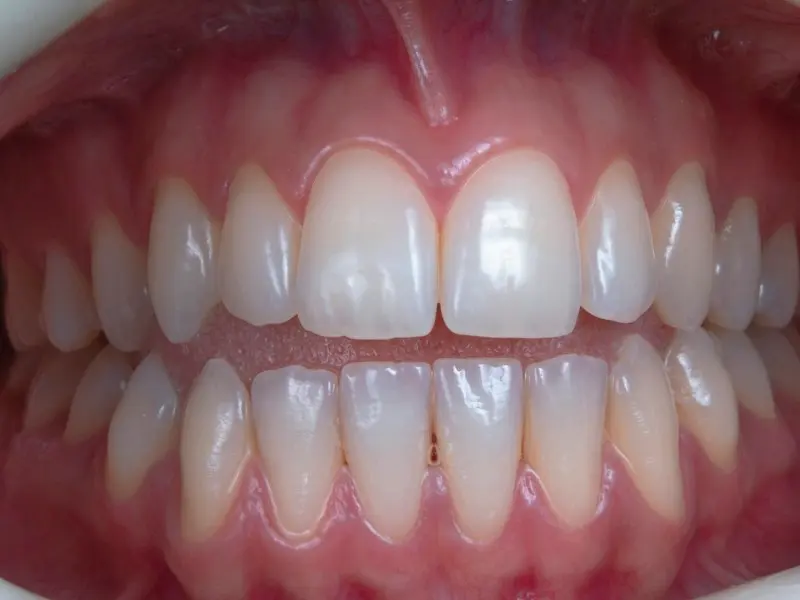
Tooth-colored fillings are repairs made from composite resin, a tooth-shaded material that bonds directly to your tooth. Your dentist uses them to fill cavities, rebuild small chips and cracks, and replace older fillings that have worn out. Because the shade is matched to your teeth, the filling blends in when you talk, smile and eat.
Fillings are a routine part of general dentistry. Finding and filling a cavity while it is still small usually means a simpler visit and less tooth removed. That is one reason regular checkups and digital X-rays matter, since many cavities start between teeth where you cannot see them.
What to expect
Your visit starts with a close look at the tooth. Your dentist checks it and may take an X-ray to see how far the decay goes. They will show you what they found and explain your options, including what could happen if you wait.
Next, the area is numbed with a local anesthetic, a medicine that blocks feeling in one part of your mouth. Your dentist removes the decay and cleans the tooth. A conditioning gel and an adhesive are applied to help the filling grip the tooth. The resin goes in thin layers, and each layer is hardened with a blue curing light.
Finally, your dentist shapes the filling to match your tooth, checks your bite with a thin piece of colored paper, and polishes the surface smooth. A simple filling often takes under an hour, though several fillings or a larger repair can take longer.
After your visit, the numbness wears off in a few hours. Mild sensitivity to cold or chewing for a few days is common. If your bite feels high or uneven once the numbness is gone, call us. A small bite adjustment is quick and often solves it.
Keep your new filling healthy the same way you protect the rest of your teeth: brush twice a day with fluoride toothpaste, clean between your teeth once a day, and keep your regular checkups.
Who it helps
Tooth-colored fillings may be a good fit if you have:
- Cavities, from small spots found on an X-ray to decay you can see or feel
- Chipped or cracked teeth with small breaks that do not reach the nerve
- Tooth sensitivity caused by decay or worn areas near the gumline
- A toothache from a cavity that has not yet reached the nerve
- Old silver or worn fillings that are cracked, leaking or have new decay around them
Not every problem is a match. If decay has reached the pulp, the soft center of the tooth that holds its nerve and blood vessels, you may need root canal therapy first. A tooth with a very large break may do better with a dental crown. For small cosmetic chips on front teeth, dental bonding uses a similar material.
A toothache that comes with facial swelling that spreads, a fever, or trouble breathing or swallowing needs care right away. If you have trouble breathing or swallowing, call 911 or go to the nearest emergency room.
Why choose our office
At our office, a filling starts with a conversation. Your dentist explains what the exam and X-rays show, why a filling is recommended, and what other choices you have. If a spot is small enough to watch, we will tell you that too.
Your dentist numbs the area before starting and checks in with you during the visit. You can ask for a break at any time, and questions are always welcome. Before treatment, our team can check your insurance benefits and walk you through any costs. Our payment options page explains other ways to pay.
Think you might have a cavity? Visit our new patient page to see what your first visit includes, or book an appointment online.
What it helps
Conditions we treat with tooth-colored fillings
Does getting a filling hurt?+
Your dentist numbs the area first, so most people feel pressure or vibration rather than pain. Your lip and cheek may stay numb for a few hours. Mild sensitivity to cold or biting for a few days afterward is common and usually fades.
How long do tooth-colored fillings last?+
Many tooth-colored fillings last for years, but every filling wears over time. How long yours lasts depends on its size, where it is, your bite and your home care. Your dentist checks fillings at each visit and will tell you if one needs repair.
Can I eat after getting a filling?+
Tooth-colored fillings harden right away under a curing light, so you do not need to wait for the material to set. It is still a good idea to wait until the numbness wears off, so you do not bite your cheek, lip or tongue by accident.
Should I replace my old silver fillings?+
Not always. If an old silver filling is intact and the tooth around it is healthy, your dentist may suggest leaving it alone, because replacing it removes some tooth structure. If a filling is cracked, worn or has decay around it, a tooth-colored filling is a common replacement.
Why does my tooth feel sensitive after a filling?+
Some sensitivity to cold, air or pressure is normal for a few days to a couple of weeks as the tooth settles. If your bite feels high, or the pain is sharp, lingers or gets worse, call our office. A quick bite adjustment often helps.
When does a tooth need a crown instead of a filling?+
A filling works well when enough healthy tooth is left to support it. If decay or a crack has destroyed a large part of the tooth, a filling may not hold up to chewing. Your dentist may then recommend a crown, which covers and protects the whole tooth.
Will my insurance cover tooth-colored fillings?+
Coverage varies by plan. Some plans cover tooth-colored fillings on back teeth differently than on front teeth. Our team can check your benefits before treatment and explain any costs, so you know what to expect before you decide.
Can a cavity go away without a filling?+
Once decay has made a hole in the enamel, the tooth cannot grow it back. Very early weak spots, before a hole forms, can sometimes be helped with fluoride and better brushing habits. Your dentist will tell you whether a spot needs a filling or can be watched.
Explore more
Related services
Patient reviews
What our Waterford Twp patients say
“I have been a client at Dental 1 for many many years and have found them knowledgeable, professional and caring. Also, the staff is awesome”
“The best team ever”
“They did a great job.Thank you”