Services
Dental Implants in Waterford Twp
Dental implants replace missing teeth with a small post placed in the jawbone and a custom crown on top. Learn who is a candidate, the steps and recovery.
Dental 1
Dental Implants in Waterford Twp
Missing a tooth can affect how you chew, how you speak and how you feel about your smile. Dental implants are one way to replace missing teeth with a new tooth that is anchored in your jaw and does not lean on the teeth next to it. At our office, your dentist reviews your health, checks your bone and gums, and explains whether an implant, a bridge or dentures suits you. You will know the steps, the healing time and the costs before treatment begins.
How it works
What to expect with dental implants
- Step 1
Exam and planning
Your dentist reviews your health history and medications, examines your gums and bite, and takes X-rays. Many implant cases also use a 3D X-ray scan to measure the bone and plan where the implant will go.
- Step 2
Placing the implant
The area is numbed and the implant post is placed in the jawbone. Some cases need a bone graft first, and some are referred to an oral surgeon or periodontist. The bone then heals around the post over several months.
- Step 3
Your new tooth
Once healing is complete, an abutment is attached and a custom crown is made to match your other teeth. Your dentist checks the fit and your bite and shows you how to care for your implant.
Why patients choose it
Benefits of dental implants
Replaces a tooth without relying on neighboring teeth
An implant crown stays fixed in place
Crown shaped and shaded to match your natural teeth
Can support a bridge or denture when several teeth are missing
May help preserve the jawbone where it is placed
Cared for with brushing, flossing and regular checkups
The basics
About dental implants
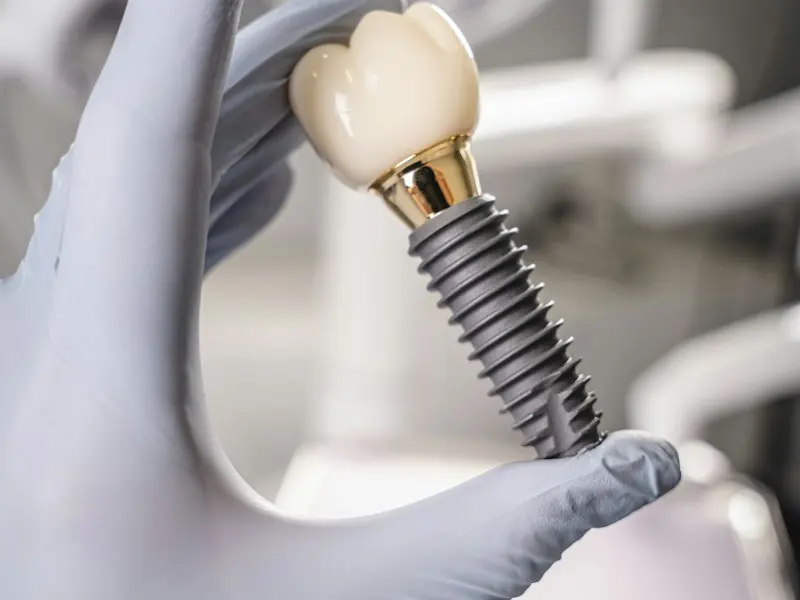
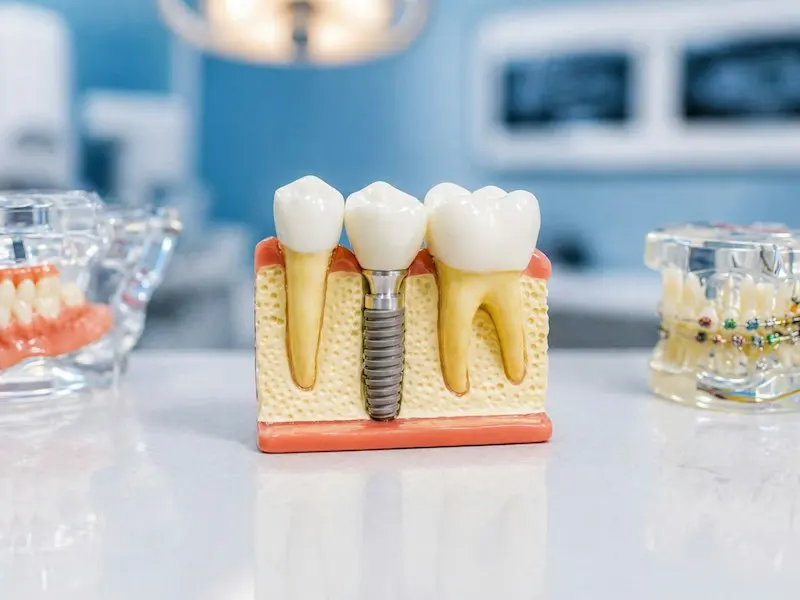
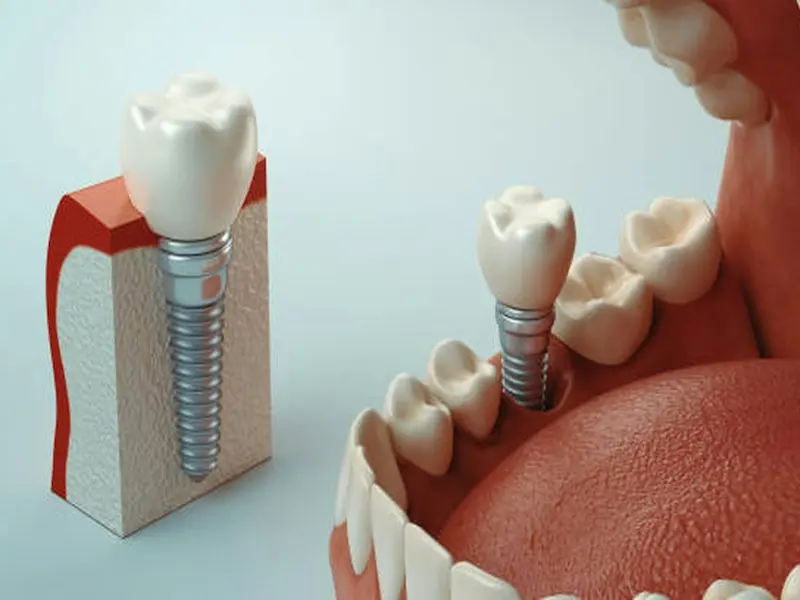
An implant has three parts. The implant itself is a small post, usually made of titanium, that is placed in the jawbone and acts like a tooth root. Over the next few months, the bone grows tightly around the post in a process called osseointegration. An abutment, a small connector, then attaches to the post and holds the crown, the part of the tooth you see. Implants can replace a single tooth, or several implants can support a bridge or a denture.
Implants need enough healthy bone and gum tissue to support them. After a tooth is lost, the bone in that area can shrink over time, so some people need a bone graft, which adds bone material to rebuild the area before or during implant placement. General health matters too. Uncontrolled diabetes, smoking and some medications can slow healing and raise the risk of problems. Your dentist reviews your health history with you, and some cases are referred to a specialist (an oral surgeon or periodontist).
Complimentary Consultation
Free
Meet Dr. Roach or Dr. Gietzen, talk through your smile goals and leave with a clear plan.
For new patients. No sales pitch and no obligation.
What are dental implants?
A dental implant is a small post, usually made of titanium, that is placed in your jawbone to replace the root of a missing tooth. Once the bone heals around it, a custom crown is attached on top. Implants can replace one tooth or several teeth, and they can also help hold a denture in place.
Implants are one of several ways to replace missing teeth. A dental bridge uses the neighboring teeth for support, and dentures rest on the gums. Each option has trade-offs in cost, time and care. Your dentist will walk you through them so you can choose what fits your mouth, your health and your plans.
What to expect
Consultation and planning. Your dentist reviews your medical history and the medications you take, examines your teeth and gums, and takes X-rays. Many cases also use a 3D X-ray scan to measure the height and width of the bone and plan where the implant will go. If the tooth is still in place but cannot be saved, a tooth extraction comes first. Some cases are referred to a specialist (an oral surgeon or periodontist), depending on the bone, the location of the tooth and your health.
Placing the implant. The area is numbed, and the implant is placed in the jawbone through a small opening in the gum. If you need extra bone, a bone graft may be placed first or at the same time. Depending on the location, you may receive a temporary tooth so there is no gap while you heal.
Healing. Over the next few months, the bone grows around the implant and holds it firmly. Some soreness, swelling and minor bleeding are common in the first few days. Your dentist will give you instructions for eating, cleaning the area and managing discomfort.
Your new tooth. When the implant has healed, an abutment is attached and your custom crown, bridge or denture is made and placed. Your dentist checks the fit, the color match and your bite.
When to call. Call our office if pain or swelling gets worse after a few days, bleeding does not slow down, or you develop a fever. Get emergency care right away if facial swelling spreads or you have trouble breathing or swallowing.
Who it helps
Dental implants are often considered for:
- Missing teeth, whether one tooth or several
- A knocked-out tooth that could not be saved
- A tooth that needs to be removed because of a deep crack or severe decay
- People who wear dentures and would like them to feel more secure
- People who would rather not reshape healthy neighboring teeth for a bridge
Implants are usually not placed until the jaw has finished growing, so children and younger teens often need a temporary option first. If an adult tooth has just been knocked out, treat it as an emergency. Hold it by the top, not the root, keep it moist in milk or saliva, and call a dentist right away. Our emergency dentistry page explains what to do next.
Why choose our office
An implant is a long-term investment, so careful planning matters. Your dentist explains each step, the healing time and the costs before treatment begins, and tells you honestly whether an implant, a bridge or dentures suits you. When a specialist is the right choice, we help coordinate the referral. Questions are always welcome.
Coverage varies by plan; our team can check your benefits before treatment and review payment options.
To get started, visit our new patient page or book an appointment to talk about replacing missing teeth.
What it helps
Conditions we treat with dental implants
Am I a candidate for dental implants?+
Many adults with missing teeth are candidates, but it depends on your bone, your gum health and your overall health. Smoking, uncontrolled diabetes and some medications can affect healing. Your dentist will review your health history and X-rays and tell you whether implants or another option fits you.
How long does the dental implant process take?+
It often takes several months from start to finish. The bone needs time to heal around the implant before the final crown is placed, and some people need a tooth removed or a bone graft first. Your dentist will give you an estimated timeline for your case.
Does getting a dental implant hurt?+
The area is numbed during placement, so most people feel pressure rather than pain. Soreness and swelling for a few days afterward are common and are often managed with over-the-counter pain relievers. If you feel anxious, tell our team so we can talk through what to expect and go at a pace that feels comfortable.
How long do dental implants last?+
With good care, implants can last many years. The crown on top may eventually wear and need replacing. Brushing, cleaning between your teeth, regular checkups and not smoking help protect the gums and bone that hold the implant in place.
Can an implant replace a knocked-out tooth?+
Often, yes, but act fast. If an adult tooth is knocked out, hold it by the top, not the root, keep it moist in milk or saliva, and call a dentist right away. A tooth put back quickly can sometimes be saved. If not, an implant is one option.
Can implants get cavities or gum disease?+
The implant and crown cannot get cavities, but the gums and bone around an implant can become infected. This condition, called peri-implantitis, can cause bone loss and put the implant at risk. Daily brushing, cleaning around the implant and regular cleanings help lower that risk.
What is the difference between an implant and a bridge?+
A bridge replaces a missing tooth by attaching a false tooth to crowns on the teeth on either side, which means reshaping those teeth. An implant stands on its own in the jawbone. Your dentist will explain the pros, cons and timing of each option for you.
Are dental implants covered by insurance?+
Some dental plans cover part of implant treatment, and others do not. Coverage varies by plan. Our team can check your benefits before treatment, explain the costs for each step, and review payment options so you can plan your care.
Explore more
Related services
Patient reviews
What our Waterford Twp patients say
“I have been a client at Dental 1 for many many years and have found them knowledgeable, professional and caring. Also, the staff is awesome”
“The best team ever”
“They did a great job.Thank you”