Services
Root Canal Therapy in Waterford Twp
Root canal therapy treats infected or inflamed pulp inside a tooth so the tooth can often be saved. Learn the signs, the steps and what recovery is like.
Dental 1
Root Canal Therapy in Waterford Twp
A deep cavity, a crack or an injury can let bacteria reach the soft center of a tooth. The result can be a throbbing toothache, sensitivity that lingers, or an infection. Root canal therapy removes the damaged tissue from inside the tooth, cleans it out and seals it, so you can often keep your natural tooth instead of losing it. Your dentist will explain what the exam and X-rays show and whether a root canal, or another option, makes sense for you.

How it works
What to expect with root canal therapy
- Step 1
Find the cause
Your dentist asks about your symptoms, tests how the tooth responds to cold and tapping, and takes X-rays to see the root and the bone around it.
- Step 2
Clean and seal the tooth
With the tooth numbed and kept dry under a thin rubber sheet, your dentist removes the pulp, cleans and shapes the canals, then fills and seals them.
- Step 3
Protect and follow up
The opening is closed with a filling, and back teeth usually get a crown. Your dentist checks healing at later visits and on future X-rays.
Why patients choose it
Benefits of root canal therapy
Can often save your natural tooth
Removes the source of infection inside the tooth
Often eases the pain of an inflamed or infected nerve
Avoids a gap that could let nearby teeth shift
Done with local anesthetic, much like a filling
Usually completed in one or two visits
The basics
About root canal therapy
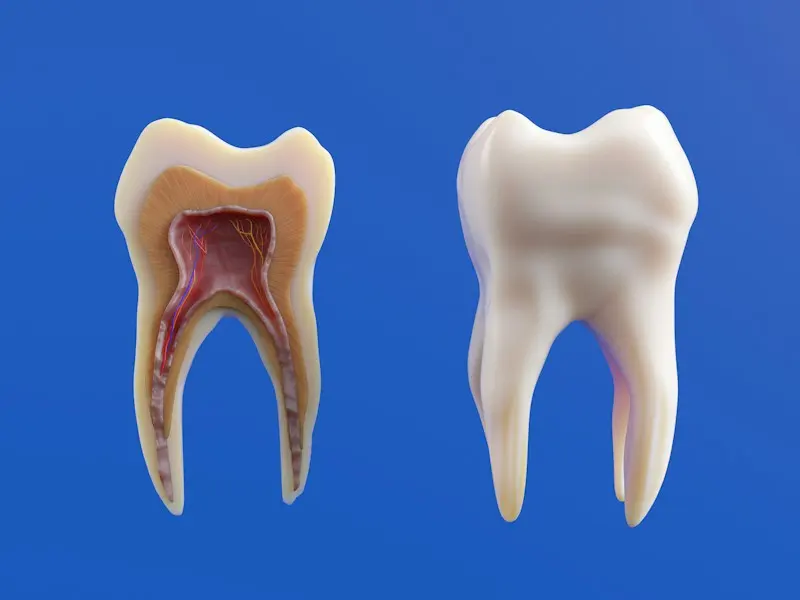
Inside every tooth, under the enamel and dentin, is the pulp. This soft tissue holds the tooth's nerves and blood vessels and runs down through narrow channels in the roots, called root canals. When deep decay, a crack, repeated dental work or a blow to the tooth lets bacteria in, the pulp can become inflamed or infected. Because the pulp sits inside hard walls, it often cannot heal once it is badly damaged. Without treatment, infection can spread to the bone at the tip of the root and form an abscess, a pocket of pus.
Root canal therapy, also called endodontic treatment, removes the damaged pulp, cleans and disinfects the canals, and fills and seals them. The tooth itself stays in place. A fully grown tooth can stay healthy without its pulp, because the tissues around the root continue to support it. After treatment, the tooth needs a filling or a crown to protect it. Some complex cases, such as teeth with curved or very narrow canals, are referred to an endodontist, a dentist who focuses on root canal care.

Complimentary Consultation
Free
Meet Dr. Roach or Dr. Gietzen, talk through your smile goals and leave with a clear plan.
For new patients. No sales pitch and no obligation.
What is root canal therapy?
Root canal therapy is a treatment that removes infected or inflamed pulp, the soft tissue with nerves and blood vessels inside a tooth. Your dentist cleans the inside of the tooth, then fills and seals it. The goal is to stop the infection and pain while keeping your natural tooth in place.
Root canals have a scary reputation, but with local anesthetic the treatment itself can feel much like getting a filling. Many people come in because of the pain of the infection, and treatment is often what helps relieve it.
What to expect
Diagnosis. Your dentist asks about your symptoms and tests the tooth, for example with cold or gentle tapping, to see how the nerve responds. Digital X-rays show the roots and the bone around them. If a root canal is recommended, your dentist will explain why and what the other options are.
Treatment. The tooth and nearby gum are numbed. A rubber dam, a thin sheet that fits around the tooth, keeps it clean and dry and keeps the materials out of your mouth. Your dentist makes a small opening in the top of the tooth, removes the pulp, and cleans, shapes and disinfects each canal. The canals are then filled with a rubber-like material called gutta-percha and sealed. A filling closes the opening. If the tooth has an active infection, your dentist may place medicine inside and finish at a second visit.
Afterward. The tooth may feel tender for a few days, especially when you bite. Over-the-counter pain relievers often help; use them as your dentist advises. Avoid chewing hard foods on that side until the tooth is fully restored. Most back teeth then need a dental crown to protect them, usually placed at a later visit. Your dentist may check the area on X-rays at future visits to see how it is healing.
If a case is complex, for example a tooth with curved or very narrow canals, your dentist may refer you to an endodontist. We will help coordinate that care.
Who it helps
Root canal therapy may be recommended if you have:
- A toothache that throbs, wakes you up or hurts when you bite
- A dental abscess, an infection at the root tip that can cause swelling or a bump on the gum
- Tooth sensitivity to hot or cold that lingers after the food or drink is gone
- A cracked tooth where the crack has reached the pulp but has not split the root
- A tooth that has darkened after an injury
Not every painful tooth needs a root canal. Sometimes a tooth-colored filling is enough, and sometimes a tooth is too damaged to save. In that case your dentist will talk with you about tooth extractions and how to replace the tooth.
When to get help right away. Facial swelling that spreads, a fever with a toothache, or trouble breathing or swallowing can mean a serious infection. Call 911 or go to the nearest emergency room if you have trouble breathing or swallowing. For a severe toothache without those signs, call our office, and see our page on emergency dentistry.
Why choose our office
Many people feel nervous when they hear the words root canal. We understand. Your dentist explains what the X-rays show, why the tooth needs care and what will happen at each step. You can ask for a break during treatment, and questions are welcome before, during and after.
Call us with questions about your insurance or costs, and see our payment options page for other ways to pay. If dental visits make you anxious, tell us, and your dentist will explain each step and go at a pace that feels comfortable.
Have a tooth that hurts? Visit our new patient page or book an appointment so your dentist can find the cause.
What it helps
Conditions we treat with root canal therapy
Does a root canal hurt?+
Your dentist numbs the tooth first, and many people say the treatment feels much like getting a filling. The pain people link with root canals usually comes from the infection beforehand. Some tenderness for a few days afterward is common and often eases with over-the-counter pain relievers.
What are the signs I might need a root canal?+
Common signs include a severe toothache when chewing, sensitivity to hot or cold that lingers after the cause is gone, a darkened tooth, swollen or tender gums near one tooth, or a pimple-like bump on the gum. Some infected teeth cause no pain, which is why checkups matter.
How many visits does a root canal take?+
Many root canals are finished in one or two visits, depending on the tooth, the number of canals and whether there is an active infection. Back teeth often have more canals and take longer. A crown, if needed, is usually placed at a later visit.
Do I need a crown after a root canal?+
Back teeth usually do. They take heavy chewing forces, and a tooth that needed a root canal has often lost structure to decay or old fillings. A crown covers and protects it so it is less likely to crack. Some front teeth only need a filling.
Is it better to just pull the tooth?+
Saving your natural tooth is often preferred when it can be done, because a pulled tooth leaves a gap that usually needs an implant, bridge or partial denture to keep nearby teeth from shifting. Sometimes a tooth cannot be saved. Your dentist will explain the pros and cons.
Will I need antibiotics?+
Not always. Antibiotics alone do not clear infection from inside a tooth, because the source is the damaged pulp. Your dentist may prescribe them if infection has spread, such as with swelling or fever. Take any medicine exactly as your dentist directs.
Can a tooth that had a root canal get infected again?+
It can happen. A new crack, new decay or a leaking filling or crown can let bacteria back in. Brushing twice a day, cleaning between your teeth daily and keeping regular checkups help protect the tooth. If pain or swelling comes back, call our office.
When is a toothache an emergency?+
Get emergency care right away if you have facial swelling that spreads, trouble breathing or swallowing, or a fever with a toothache. Call 911 or go to an emergency room for breathing or swallowing problems. For a bad toothache without these signs, call our office as soon as possible.
Explore more
Related services
Patient reviews
What our Waterford Twp patients say
“I have been a client at Dental 1 for many many years and have found them knowledgeable, professional and caring. Also, the staff is awesome”
“The best team ever”
“They did a great job.Thank you”