Services
Dental Cleanings & Exams in Waterford Twp
Professional cleanings and exams remove plaque and tartar, check your teeth and gums, and help find problems early, when care is often simpler.
Dental 1
Dental Cleanings & Exams in Waterford Twp
Even with good brushing and flossing, plaque can build up in places that are hard to reach and harden into tartar. A professional cleaning removes that buildup, and an exam lets your dentist check your teeth, gums and mouth for early signs of trouble. At our office, your hygienist and dentist explain what they see as they go, answer your questions, and give you practical tips for your home care. Regular visits help you stay ahead of problems instead of reacting to them.
How it works
What to expect with dental cleanings & exams
- Step 1
A gentle, thorough cleaning
Your hygienist removes plaque and tartar above and just below the gumline, then polishes and flosses your teeth. If an area feels sensitive, say so, and they can slow down or take a break.
- Step 2
A careful exam
Your dentist checks each tooth, your gums, your bite and the soft tissues of your mouth, including a check for signs of oral cancer, and reviews any X-rays that are due.
- Step 3
A plan for next steps
You hear what was found in plain language, get tips for brushing and flossing, and leave knowing when to come back and whether any treatment is recommended.
Why patients choose it
Benefits of dental cleanings & exams
Removes tartar that brushing and flossing cannot
Checks for early signs of gum disease and cavities
Lifts many surface stains from coffee, tea and tobacco
Can help with bad breath caused by plaque buildup
Includes a look at the soft tissues of your mouth
Practical home care tips for your teeth and gums
The basics
About dental cleanings & exams
Plaque is a soft, sticky film of bacteria that forms on your teeth every day. If it is not removed, it can harden into tartar (also called calculus), which brushing and flossing cannot remove. Plaque and tartar along the gumline can irritate your gums and lead to gingivitis, the early stage of gum disease, which often shows up as red, puffy gums that bleed when you brush. The bacteria in plaque also make acids that can weaken enamel (the hard outer layer of your teeth) and cause cavities.
A cleaning removes this buildup, and an exam looks for the problems it can cause. Your hygienist measures the small space between your gums and teeth to check for signs of gum disease, and your dentist looks for cavities, worn or cracked teeth, and changes in the soft tissues of your mouth. Many people come in about every six months, but your dentist may suggest a different schedule based on your gum health and history.

Complimentary Consultation
Free
Meet Dr. Roach or Dr. Gietzen, talk through your smile goals and leave with a clear plan.
For new patients. No sales pitch and no obligation.
What are dental cleanings and exams?
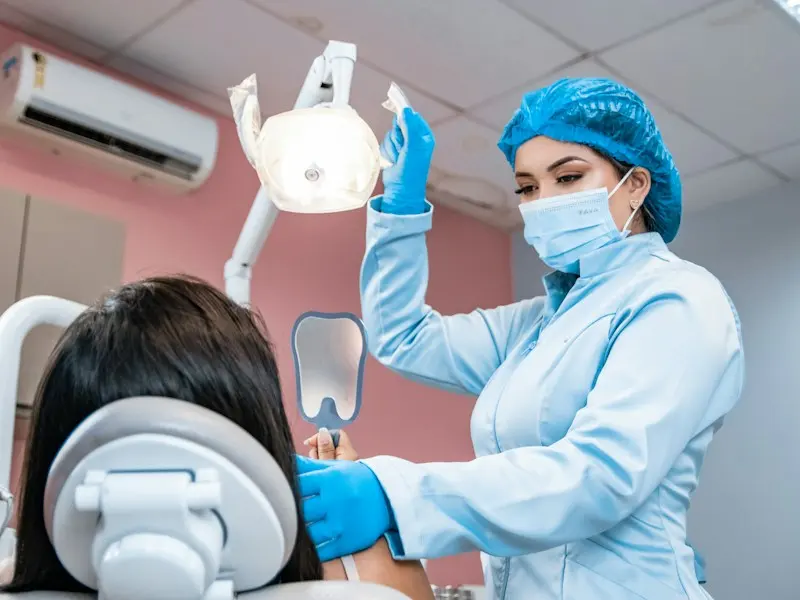
A dental cleaning and exam is a routine visit to keep your teeth and gums healthy. A dental hygienist removes plaque and tartar, then polishes and flosses your teeth. Your dentist examines your teeth, gums and mouth, reviews any X-rays, and explains what they find. It is the core of preventive dental care.
Preventive care means finding and treating small problems before they grow. Even if nothing hurts, regular visits let your dentist compare your mouth over time and catch changes you may not notice yourself.
What to expect
Your visit usually starts with a quick review of your health history and any medications, since some conditions and medicines affect your gums and mouth. If X-rays are due, they may be taken at this point.
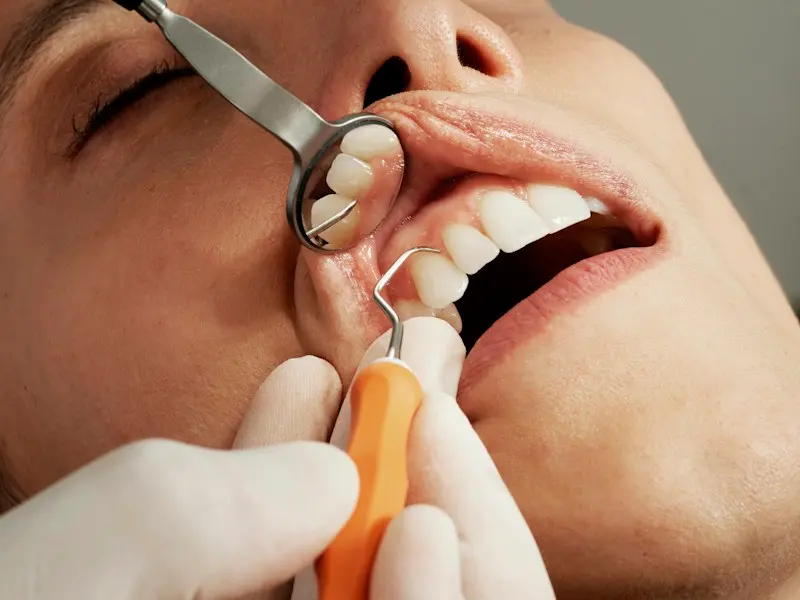
Next, your hygienist cleans your teeth. They use small hand tools, and in many cases an ultrasonic scaler (a tool that uses gentle vibration and a stream of water), to remove plaque and tartar above and just below the gumline. They then polish your teeth with a slightly gritty paste to lift surface stains and floss between each tooth. You may also be offered a fluoride treatment, which helps strengthen enamel.
Your hygienist also checks your gums. They gently measure the small space between each tooth and the gum with a thin tool called a probe. Healthy spaces are usually shallow, about 1 to 3 millimeters. Deeper spaces, called pockets, can be a sign of gum disease.
Finally, your dentist examines your teeth, gums, bite and the soft tissues of your mouth, including a check for signs of oral cancer. They look over any X-rays and explain what they see. If treatment is recommended, you will hear why, what your options are, and what to expect. If everything looks healthy, you will leave with tips for home care and a plan for your next visit.
A routine visit often takes about an hour, and a first visit may take a little longer. If it has been a long time since your last cleaning, there may be more buildup to remove. In that case, your hygienist may need more than one visit, or your dentist may recommend a deeper cleaning first.
Who it helps
Regular cleanings and exams are for nearly everyone, and they are especially helpful if you notice:
- Bleeding gums when you brush or floss
- Red, swollen or tender gums, which can be early signs of gum disease
- Bad breath that lingers after brushing
- Surface stains on your teeth from coffee, tea, red wine or tobacco
- A history of cavities, or a sweet tooth you are working on
If your exam shows signs of gum disease beyond the early stage, your dentist may recommend gum disease treatment, which includes a deeper cleaning below the gumline. People with diabetes, people who smoke, and people who are pregnant may also need closer attention to their gums, so let us know if any of these apply to you.
Why choose our office
We want your cleaning to feel calm and unhurried. Your hygienist explains what they are doing, checks in with you along the way, and stops whenever you need a break. Your dentist shows you anything worth discussing and explains your options in plain language before recommending any treatment. Questions are always welcome.
Our team can check your insurance benefits before your visit. Coverage varies by plan.
If it has been a while since your last cleaning, you are not alone, and there is no judgment here. Start with our new patient information, or book an appointment when you are ready.
What it helps
Conditions we treat with dental cleanings & exams
How often should I get my teeth cleaned?+
Many people come in about every six months. Your dentist may suggest more frequent visits if you have gum disease, a history of cavities, or a health condition such as diabetes. The right schedule depends on your mouth, so ask your dentist what fits you.
Does a dental cleaning hurt?+
Most people feel pressure, scraping or vibration rather than pain. If your gums are inflamed or your teeth are sensitive, some areas may feel tender. Tell your hygienist, who can slow down, take breaks, and talk with you about numbing options for sensitive spots.
What is the difference between a regular cleaning and a deep cleaning?+
A regular cleaning removes plaque and tartar from a healthy mouth, mostly above the gumline. A deep cleaning, called scaling and root planing, treats gum disease by cleaning below the gumline and smoothing the tooth roots. It is usually done with numbing.
Will a cleaning whiten my teeth?+
A cleaning and polish can remove many surface stains from coffee, tea, red wine and tobacco, so your teeth may look brighter. It does not change the natural color of your teeth. If you want a lighter shade, ask your dentist about teeth whitening.
Why do my gums bleed during a cleaning?+
Bleeding is often a sign of inflamed gums, usually from plaque along the gumline, and is a common sign of gingivitis. Some medications, such as blood thinners, can also play a part. With regular cleanings and daily flossing, gums often bleed less over time.
Do I need X-rays at every cleaning?+
No. Your dentist decides when X-rays are needed based on your age, your risk of cavities and gum disease, and any symptoms. Some people need them more often than others. You can always ask why a particular X-ray is recommended.
Does insurance cover cleanings and exams?+
Many dental plans cover preventive visits such as cleanings and exams, often up to a set number each year. Coverage varies by plan, so our team can check your benefits before your visit and let you know what to expect.
What can I do at home between cleanings?+
Brush twice a day for two minutes with a fluoride toothpaste, clean between your teeth once a day with floss or another cleaner, and limit sugary snacks and drinks. These habits, recommended by the American Dental Association, help keep plaque from building up between visits.
Explore more
Related services
Patient reviews
What our Waterford Twp patients say
“I have been a client at Dental 1 for many many years and have found them knowledgeable, professional and caring. Also, the staff is awesome”
“The best team ever”
“They did a great job.Thank you”